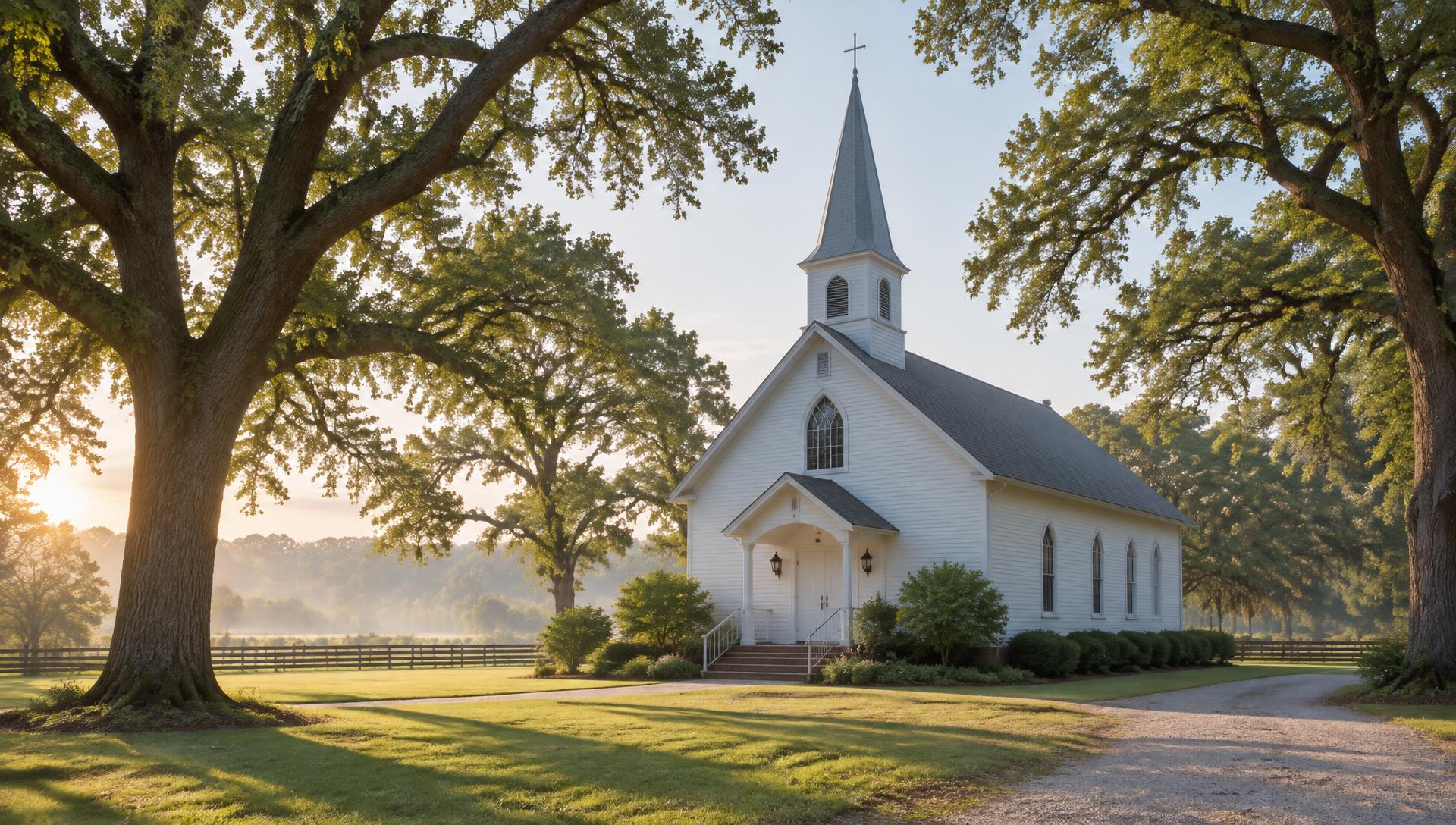
Church Property
Let Sacred Property Continue Serving People.
For congregations, denominations, dioceses and ministry boards weighing what comes next for a building that has held decades of worship, weddings and funerals.
Start a Confidential Church Property ConversationFew property decisions carry as much weight as this one. A sanctuary holds decades of weddings, funerals, baptisms and ordinary Sunday mornings, and a board weighing its future is usually carrying grief along with a budget. This review moves at the congregation's pace, begins with approval and restriction questions rather than with value, and concerns property alone.
What we review in this category
What this is, and what it is not
This review concerns property and approved assets only. Mustard Farms does not acquire a congregation, does not assume a church's ministry, name, membership or religious identity, and does not merge with or govern any church. A congregation remains entirely its own body. The subject here is a building, a campus or land, and nothing else.
Denominational approval
Many congregations hold property subject to a denominational trust clause, a presbytery, conference, diocese, district or synod approval requirement, or a national body's consent. Some hold property that reverts if worship ceases. These provisions govern whether a transfer is possible at all and are identified before anything else is discussed.
Donor restrictions and memorial gifts
Land given a century ago often came with conditions. Windows, organs, pews, bells, plaques and baptistries were frequently given in memory of specific people whose families are still in the community. A responsible transition identifies these, and a plan for memorials and named items is part of the conversation rather than an afterthought.
Cemeteries and interments
Where a cemetery, columbarium, memorial garden or scattered remains exist on the property, state law generally governs access, perpetual care and any transfer, and often prohibits certain transactions outright. This is reviewed as its own subject with counsel.
Occupants and community commitments
Church buildings rarely hold only one congregation. A preschool, a food pantry, a recovery group, a scout troop, a second congregation worshiping in another language, a polling place — these represent commitments to a community that a responsible transition takes seriously. Tell us who uses the building and under what arrangement.
Fixtures and what goes with the building
Communion ware, paraments, hymnals, the organ, bells, the pulpit and sanctuary furnishings are often intended to stay with the congregation or go to a sister church. Identify what is meant to be excluded so nothing is assumed.
Debt, zoning and building condition
Denominational loans, bond programs, mortgages and unpaid obligations are reviewed alongside zoning, accessibility, boiler and roof condition, and the true annual cost of keeping the doors open. Many congregations find the honest number clarifying.
For a board or council beginning this conversation
Closing or consolidating is painful, and a board is usually carrying grief along with a budget. A review produces a documented picture of what a charitable transfer would involve, which is useful to a council even if it chooses a different path entirely. There is no obligation and no timeline imposed from our side.
Information the review requires
- The legal owner of record: the congregation, a denominational body, or a separate corporation.
- What the congregation's bylaws or constitution require for a transfer, and what vote has occurred.
- Denominational approval requirements, and who at that level must consent.
- Any reversionary clause, deed restriction or trust clause affecting the property.
- Donor restrictions on the original gift of the land or building.
- Cemetery, columbarium, memorial gardens or interments on the property.
- Memorial gifts and named fixtures: windows, organ, pews, plaques, baptistry.
- Occupants: a school, daycare, food pantry, recovery group, another congregation.
- Mortgages, denominational loans, bond debt, liens and unpaid obligations.
- Zoning, permitted use and whether the current use is legally nonconforming.
Questions specific to this category
A Mustard Farms initiative supporting approved Commissary Grant programs.
Organizational information, governance and the full review process are published at MustardFarms.org. Program information is at CommissaryGrant.com.
Mustard Farms does not provide legal, tax, appraisal or financial advice. Proposed gifts are subject to legal, financial, title, environmental, operational and governing-body review and written acceptance. Donors should consult independent advisers.
Start a Confidential Church Property Conversation